Information
Landmark: Graz CathedralCity: Graz
Country: Austria
Continent: Europe
Graz Cathedral, Graz, Austria, Europe
Graz Cathedral (Domkirche St. Ägidius) is a 15th-century Gothic church in the historic center of Graz, Austria. It serves as the seat of the Bishop of the Diocese of Graz-Seckau and is a central component of the "Graz City Crown" (Grazer Stadtkrone), a group of four historically significant buildings situated on a terrace at the base of the Schlossberg.
Visual Characteristics
The cathedral is a late-Gothic hall church with a relatively plain, white-washed exterior that belies its ornate interior. The most prominent outdoor feature is the Gottesplagenbild (God's Plagues Fresco), a faded 1485 mural on the south wall. The interior is a rich fusion of Gothic vaulting and lavish Baroque furnishings, featuring 17th-century stucco work, a monumental high altar, and two elaborate reliquary chests.
Location & Access Logistics
The cathedral is located at Bürgergasse 1, 8010 Graz.
Public Transport: Directly accessible via Tram lines 1 and 7 (stop: "Kaiser-Josef-Platz/Oper") or a 5-minute walk from Hauptplatz (Tram lines 1, 3, 4, 5, 6, 7).
Pedestrian Access: Situated in the city center, it is part of the pedestrianized "City Crown" ensemble.
Parking: No parking at the site. The nearest facility is the "Pfauengarten Garage."
Entry: Admission is free; however, tourist visits are restricted during religious services.
Historical & Ecological Origin
The current building was constructed between 1438 and 1462 by Emperor Frederick III as a court church for the Holy Roman Empire. It was built on the site of an earlier 12th-century church dedicated to St. Giles (Ägidius). In 1786, the church was elevated to cathedral status. Geologically, the structure is anchored on the same dolomite/limestone terrace that supports the Graz Castle.
Key Highlights & Activities
Gottesplagenbild: A rare medieval fresco depicting the "Three Plagues" of 1480: the Black Death, the Turkish invasion, and a locust infestation.
Reliquary Chests: Two mid-15th-century chests at the chancel entrance, originally bridal chests from Mantua, Italy, decorated with ivory and bone carvings based on Petrarch's poems.
The Organ: A modern instrument consecrated in 2023, featuring 5,354 pipes and 73 stops.
High Altar: A Baroque masterpiece (1730–1733) designed by Georg Kraxner, depicting the glorification of St. Giles.
Infrastructure & Amenities
The cathedral is situated in a high-density tourist area with 5G cellular coverage. Public restrooms are located in the adjacent Diocesan Museum. While the main nave is wheelchair accessible, the narrow streets leading to the cathedral from certain directions involve slight gradients.
Best Time to Visit
Photography of the exterior fresco is best in the morning or early afternoon when light is direct. To hear the organ, visit during mid-day "Sounds at Noon" (seasonally) or Sunday Mass. The cathedral is typically open daily from 07:00 to 19:00.
Facts & Legends
A historical oddity is the AEIOU inscription-the motto of Emperor Frederick III-which can be found above the West Portal; it is often interpreted as Austria Est Imperare Orbi Universo (Austria is destined to rule the world). Legend states that the relics stored in the Italian bridal chests were hidden in the cathedral walls for centuries during times of war to prevent their desecration.
Nearby Landmarks
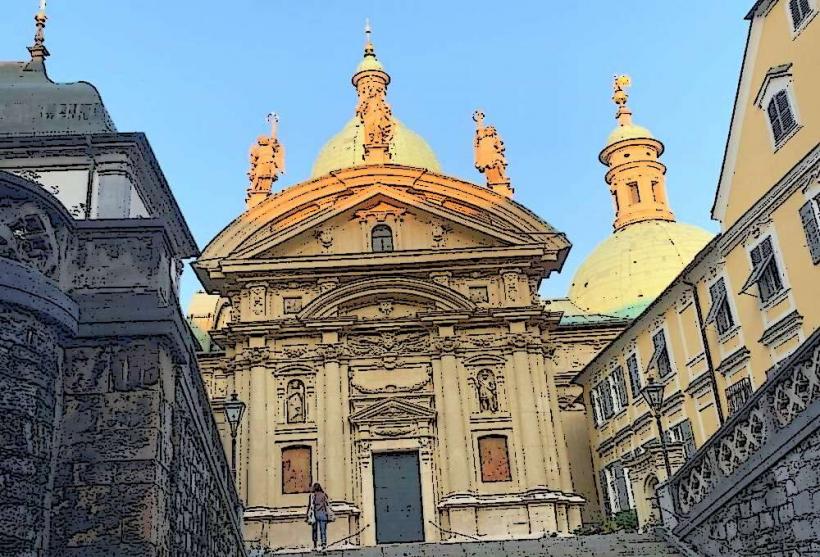
Mausoleum of Emperor Ferdinand II – 0.05km East (Adjacent)
Graz Castle (Grazer Burg) – 0.1km North
Styrian Armoury (Landeszeughaus) – 0.3km South
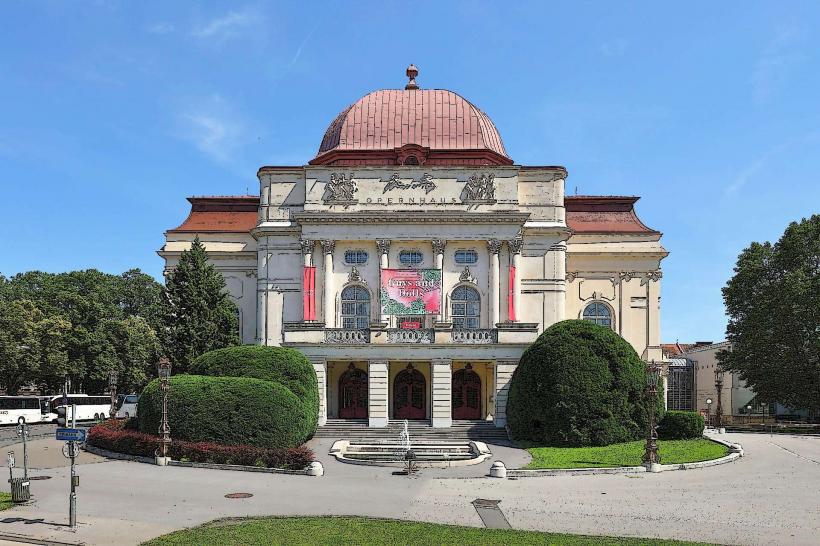
Graz Opera House – 0.4km Southeast
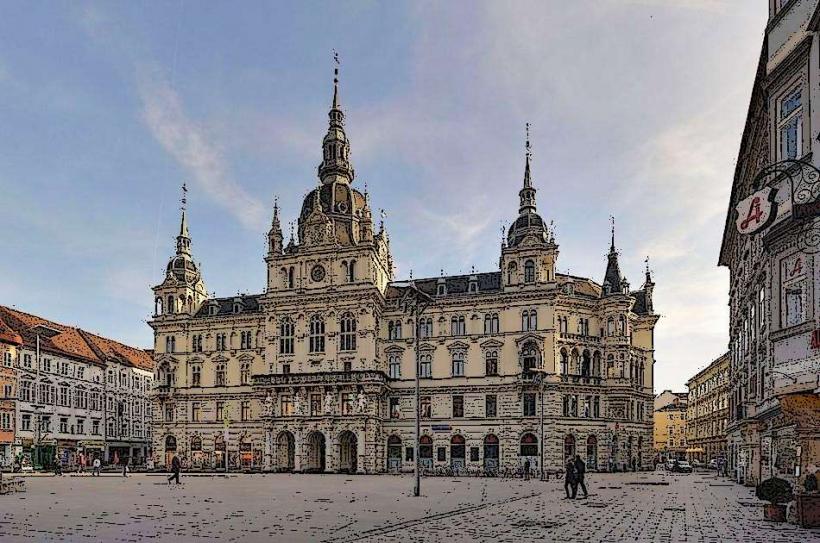
Hauptplatz (Main Square) – 0.4km West